Last week's liver reset was the warm-up — this week we bring the rest of the body's detox network into the picture.
Key Takeaways
- A liver reset is only the beginning — supporting the whole detox network (gut, kidneys, lymphatic system, skin and brain) matters just as much as the liver itself.
- Different organs need different support: protein and amino acids for the liver, fibre diversity for the gut, and simple hydration for the kidneys.
- Sleep isn't separate from detox — your brain has its own waste-clearance process, and it's closely tied to how well you sleep.
- If you're heading into a Northern Hemisphere winter, now is the moment to reset sleep, light exposure, movement and vitamin D before the darker months arrive.
- Detox isn't only physical — reducing mental noise and creating quiet space matters too.
Last week we started gently. We reduced alcohol, cleaned up the diet, supported the liver, fed the gut, hydrated, moved and slept. That first phase matters, because I don't believe in throwing an exhausted body straight into a deep cleanse — but once those foundations are in place, we can go deeper.
A true seasonal cleanse shouldn't focus on one organ alone. Your liver is important, but so are your kidneys, gut, lymphatic system, skin, muscles, metabolism and brain. So for the next 7–14 days, we're shifting from a liver reset into support for the whole system.
1. Keep The Liver Reset Going
Don't undo the work you've already started. Continue avoiding or dramatically reducing:
- Alcohol
- Added sugar
- Ultra-processed foods
- Sugary drinks
- Deep-fried foods
- Refined snacks
- Excessive caffeine
- Late-night eating
There is limited evidence that extreme commercial "detox diets" literally remove stored toxins from the body.¹ That's why our approach stays much more sensible.
Reduce the burden while supporting the organs that already carry out detoxification and elimination every day.
2. Now Support The Whole Detox System
Your body doesn't detox through the liver alone — think of it as a network:
- Liver — processes and transforms many compounds, and produces bile.
- Kidneys — continuously filter the blood and excrete waste products through urine.
- Gut — moves waste out through the bowel and houses a vast microbial ecosystem.
- Lymphatic system — helps return fluid from the tissues to the circulation and plays an important role in immune function.
- Skin — acts primarily as a protective barrier and regulates body temperature through sweating.
- Brain — has its own specialised clearance pathways, linked to the cerebrospinal fluid and the glymphatic system.
So rather than obsessing over one organ, support the whole system.
3. Go Deeper With Herbal Support
This is where I like to broaden our herbal support beyond the liver. Depending on the individual, you may support:
- Liver and bile function — Liver Support
- Digestion and bowel regularity — Colon Support
- Lymphatic flow — Water Flo
- Kidney and fluid balance — Wellness Water
- Antioxidant defence — Antioxidant Support
- Gut health — Gut Repair
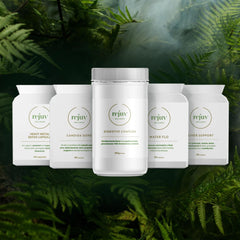
At Rejuv, this is where a structured Detox Pack can make the process simpler, bringing together targeted support as part of a complete cleanse programme. The aim isn't to make detoxification aggressive — we want it to feel supported and manageable enough that you actually complete it. Herbs can interact with medication and aren't appropriate for everyone, so individual guidance still matters.
4. Feed Your Gut Like An Ecosystem
During this deeper phase, increase plant diversity even further. Aim for:
- Leafy greens
- Cruciferous vegetables
- Herbs and spices
- Berries
- Lentils and beans
- Nuts
- Seeds
- Fermented foods where tolerated
- Prebiotic fibres
Different fibres feed different populations of gut microbes, so instead of eating the same "healthy" foods day after day, try to vary what's on your plate — and keep an eye on your bowel movements too, since regular elimination matters.
5. Boost Protein
Going deeper doesn't mean eating less and less. Keep good-quality protein once a day at your main meal — preferably lunch — since protein provides the amino acids needed throughout the body, including those involved in producing glutathione, an important intracellular antioxidant.² Good options include:
- Organic eggs
- Wild fish
- Wild game — give traditional red meat a rest
- Organic poultry, if you don't fancy the above
- Organic kefir, if you tolerate dairy
- Legumes
- Nuts and seeds
- Appropriate plant proteins
This becomes even more important in midlife.
Your cleanse should protect muscle, not sacrifice it.
6. Don't Forget Your Kidneys
Your kidneys filter your blood continuously. Their job doesn't need a special juice — just adequate hydration and good overall health.
Drink water consistently throughout the day according to your activity, climate and thirst, and add a pinch of Celtic sea salt to help re-mineralise and hydrate at a cellular level. Don't confuse "more" with "better" — 1.5–2 litres a day is a sensible target for most people.
7. Cleanse Your Brain With Sleep
This is one of my favourite parts of the deeper seasonal cleanse. Your brain has a specialised waste-clearance network commonly called the glymphatic system.
Research increasingly links sleep with cerebrospinal-fluid movement and the clearance of metabolic waste products from the brain.³ Much of the underlying mechanistic research originated in animals, and scientists are still establishing exactly how this system behaves in humans — but the relationship between sleep and brain clearance has become an important area of neuroscience.³⁴
So when someone tells me they're "detoxing" while sleeping five hours a night, I think we're missing the bigger picture.
For the next two weeks:
- Keep a regular bedtime
- Get morning natural light
- Reduce late-night screens
- Stop caffeine earlier
- Avoid alcohol
- Keep your room cool and dark
- Give yourself enough opportunity to sleep
Your brain needs a reset too.
8. Prepare Your Body For Winter
If you live in the Northern Hemisphere, this seasonal reset serves another purpose. Winter is coming — days grow shorter, natural light decreases, and many of us spend more time indoors. Exercise can decline, sleep patterns can shift, and some people notice lower mood, more tiredness and a bigger appetite as daylight fades. Reduced winter daylight is associated with seasonal changes in circadian rhythm and is thought to contribute to seasonal affective disorder in susceptible people.⁵
So now is the time to establish the habits you want to carry into winter — your seasonal cleanse is also a preparation phase for what's ahead:
- Get outside during daylight
- Exercise regularly
- Protect your sleep-wake rhythm
- Stay socially connected
- Don't retreat indoors completely
9. Think About Vitamin D Before Winter
For people living in the UK and similar northern latitudes, sunlight is generally insufficient for normal vitamin D production during much of autumn and winter. UK guidance recommends that adults consider 10 micrograms (400 IU) of vitamin D daily during autumn and winter.⁶ Individual needs can differ, especially if you've previously been deficient, spend very little time outside, have darker skin, or have certain medical conditions.
This doesn't mean mega-dosing. It means recognising that winter changes our nutritional environment too.
10. Move Every Day
Movement belongs in every detox programme I design — not because you're literally sweating toxins out, but because exercise supports:
- Cardiovascular health
- Insulin sensitivity
- Muscle
- Mental health
- Cognitive health
- Sleep
- Healthy body composition
WHO recognises regular physical activity as beneficial for both physical and mental health, including brain health and sleep,⁷ and the colder months shouldn't mean becoming sedentary — it's the same argument I make for walking being the most underrated wellness habit we have. During your cleanse, aim to:
- Walk every day
- Lift weights two or three times a week
- Stretch
- Get outside
11. Create A Mental Detox
Now ask yourself another question: what is draining your mind? The end of the year can become incredibly noisy — deadlines, notifications, work pressure, family commitments, social media, constant news, Christmas planning, financial pressure. A full seasonal reset should therefore include periods where your nervous system isn't continuously being stimulated.
For the next 7–14 days, try:
- Less social media
- No phone first thing in the morning
- Walking without headphones occasionally
- Prayer or meditation
- Journalling
- Reading
- Time outdoors
- Earlier evenings
- Saying "no" to unnecessary commitments
Sometimes the biggest reset isn't another supplement. It's creating space.
Where To Start
Trying to hold all of this at once — liver, gut, kidneys, sleep, brain, mindset — is a lot. Most people only need to focus hard on two or three of these areas at a time, not all seven.
If you'd like a clearer picture of which of these actually need your attention this season, the Rejuv Wellness Profile is a good place to begin. It highlights your top three areas to focus on, so you're putting your energy where it will make the most difference rather than guessing.
Ready to put this into a daily structure? Next week I'll walk you through my full Dawn to Dusk protocol.
You don't need to do everything at once. You need the right starting point.
References
- National Center for Complementary and Integrative Health. "Detoxes" and "Cleanses": What You Need To Know. 2019. https://www.nccih.nih.gov/health/detoxes-and-cleanses-what-you-need-to-know
- Wu G, Fang YZ, Yang S, Lupton JR, Turner ND. Glutathione metabolism and its implications for health. Journal of Nutrition. 2004;134(3):489–492. https://pubmed.ncbi.nlm.nih.gov/14988435/
- Reddy OC, van der Werf YD. The sleeping brain: harnessing the power of the glymphatic system through lifestyle choices. Brain Sciences. 2020;10(11):868. https://pubmed.ncbi.nlm.nih.gov/33212927/
- Chong PLH, Garic D, Shen MD, Lundgaard I, Schwichtenberg AJ. Sleep, cerebrospinal fluid, and the glymphatic system: a systematic review. Sleep Medicine Reviews. 2022;61:101572. https://pubmed.ncbi.nlm.nih.gov/34902819/
- NHS. Seasonal Affective Disorder (SAD) — Overview. https://www.nhs.uk/mental-health/conditions/seasonal-affective-disorder-sad/overview/
- NHS. Vitamin D — Vitamins and Minerals. https://www.nhs.uk/conditions/vitamins-and-minerals/vitamin-d/
- World Health Organization. Physical Activity — Fact Sheet. https://www.who.int/news-room/fact-sheets/detail/physical-activity