Key Takeaways
- Men and women share the same detox organs, but not the same physiology — so while the foundations of a good seasonal cleanse for men and women stay the same, how each sex is nourished through it may need to change.
- A cleanse should reduce unnecessary burden while providing the nutrients your liver, gut and cells need to keep functioning — not create suffering or a healing crisis. Adding the right herbs can help a cleanse work with your body rather than against it.
- Women should be cautious with aggressive fasting or restrictive cleansing during periods of high physiological demand, including pregnancy and breastfeeding, and should factor in menstrual status, iron needs and the menopause transition.
- Men shouldn't use cleansing as an excuse for severe calorie restriction at the expense of muscle mass, protein intake and metabolic health.
- After midlife, protecting muscle becomes increasingly important for both sexes, making adequate protein and resistance exercise key parts of a sensible reset.
We talk a lot about personalised health, yet when it comes to a seasonal cleanse for men and women, most plans still treat everyone the same. I don't believe that makes sense. After almost 30 years as a naturopath and nutritionist, I believe it's wise to tailor your seasonal cleanse to your physiology.
Our fundamental detoxification systems are the same. Men and women both rely on the liver, kidneys, gut, lungs and skin to process and eliminate metabolic waste and environmental compounds, but the environment those systems operate within is not identical. The same herbal supplements can support a cleanse for both sexes to restore detox pathways, and this doesn't have to be difficult or create suffering and a healing crisis.
Hormones, body composition, muscle mass, iron requirements, life stage, stress, sleep and even the activity of certain liver enzymes can differ between men and women. So while the foundations of a healthy seasonal cleanse remain the same, how we nourish the body during that cleanse may need to change. This becomes even more important as we move through our 40s, 50s and beyond.
Detoxification Is Not The Same As A "Detox / Cleanse"
Before going any further, I want to make an important distinction: your body is detoxifying every minute of every day.
Your liver transforms many compounds into forms that can be eliminated. Your kidneys filter the blood. Your digestive system moves waste out of the body. Your lungs remove carbon dioxide, while your skin contributes to normal thermoregulation and excretion through sweat.
A seasonal cleanse does not suddenly switch these systems on.
Instead, I see cleansing as an opportunity to remove some of the things making their job harder while increasing the things that support normal physiology — and to restore the function of your detox pathways, so your organs can detox effectively on a daily basis and shift you towards disease prevention.
That means less alcohol, ultra-processed food, excessive sugar and unnecessary chemical exposure, alongside more fibre, colourful plants, quality protein, healthy fats, hydration, movement and sleep.
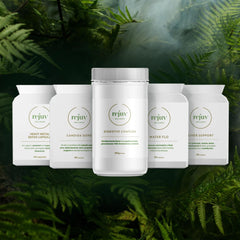
To avoid suffering and a healing crisis, add in herbs that support your Liver, Lymphatic System and Gut, and help your body clear unnecessary fungus, candida and heavy metals that block your detox pathways from working effectively day to day. You can buy the individual supplements separately, or add in a Detox Pack, which comes with a full wellness plan built around the same principles I set out in our seasonal cleanse guide.
That philosophy applies to everyone — but this is where men and women begin to diverge.
Why Biological Sex Matters
Male and female physiology is influenced by different patterns of sex hormones throughout life. Women also experience profound physiological transitions through menstruation, pregnancy, breastfeeding, peri-menopause and menopause, while men experience hormonal changes with ageing too — andropause — although generally without the abrupt reproductive transition of menopause.
There are also documented sex differences in the activity of some liver enzymes involved in metabolising medications and other compounds,¹ reflecting broader differences in pharmacokinetics and pharmacodynamics between men and women.² This does not mean one sex has a "better" detoxification system — it means a one-size-fits-all cleanse ignores some important biology.
The Female Seasonal Cleanse
For women, my first question is not simply "What do we want to remove?"
It is "What stage of life is this woman in, and what does her body need right now?" That distinction is enormously important.
1. Premenopausal Women: Do Not Forget Iron
Women who menstruate generally require considerably more dietary iron than adult men because of menstrual blood loss.³ That matters during a cleanse: if you dramatically reduce food intake, eliminate iron-rich foods or spend days drinking predominantly juices, you may unintentionally reduce the nutrients needed for energy and normal red blood cell production. I've written in more depth about this in why iron, B vitamins and magnesium matter so much for women's health.
Instead, include foods such as:
- Leafy green vegetables.
- Lentils and black beans.
- Pumpkin seeds.
- Eggs (organic free range).
- Wild fish and wild game such as venison or kudu (my favourite way to boost iron).
- Vitamin C-rich vegetables and fruits alongside plant sources of iron to support absorption.
A cleanse should leave you better nourished, not depleted.
2. Work With Your Menstrual Cycle — Without Becoming Obsessive
Hormones change throughout the menstrual cycle, and some women notice corresponding changes in appetite, energy, sleep, exercise tolerance and cravings — something I go into in more detail in my piece on exercising in line with each phase of your cycle. That doesn't mean every meal needs to be dictated by the calendar — it means listening.
If you're hungrier, exhausted or approaching menstruation, that may not be the ideal moment for fasting or a detox programme. I'd rather see a woman eat a nourishing meal of protein, vegetables, fibre and healthy fats than force herself through a fast simply because her cleanse plan says she should. We always set clients up to win, choosing a start date that fits their physiology as well as their social and work calendar.
Your body's signals matter.
3. Peri-Menopause And Menopause: Change The Goal
This is where I think the traditional detox mentality particularly needs updating. During the menopause transition, changes in ovarian hormones are accompanied by changes in body composition, fat distribution, glucose metabolism, sleep and cardiovascular risk — findings from a large US cohort study published in JCI Insight.⁴ A 2021 review in the journal Nutrients describes how many women also notice a shift in energy metabolism and where the body tends to store fat as oestrogen levels decline.⁵ It's worth being honest that individual response to this transition varies considerably, and much of this evidence is observational rather than proof of direct cause.
So for a woman in her 40s or 50s, the objective shouldn't simply be eat less, weigh less. We need to think about muscle, metabolic health, insulin sensitivity, bone health, sleep and stress.
I therefore favour:
- Quality protein at each main meal.
- Plenty of colourful vegetables.
- Fibre-rich foods and prebiotic fibre to support bowel function and the microbiome.
- Healthy fats.
- Resistance exercise.
- Walking.
- Minimal alcohol.
- Consistent sleep.
- Appropriate fasting rather than excessive fasting.
The goal is to emerge from a cleanse metabolically stronger, not simply lighter on the scales.
4. Alcohol Matters More Than Many Women Realise
One of the simplest changes during a female seasonal cleanse is also one of the most powerful: take alcohol out.
On average, women have less body water than men of the same weight, meaning an equivalent amount of alcohol can produce a higher blood alcohol concentration.⁶ Alcohol is also metabolised predominantly by the liver,⁷ so a period without it removes an unnecessary metabolic burden while often improving sleep quality, appetite regulation and morning energy at the same time. For many women, this single change can be more valuable than buying another "detox" product.
5. Pregnancy And Breastfeeding Are Not The Time For A Detox
This deserves its own rule: pregnancy and breastfeeding are periods of increased nutritional demand. I wouldn't recommend aggressive detox programmes, prolonged fasting, restrictive diets or unsupervised cleansing supplements during these stages. The focus should instead be on nutrient density, food safety, appropriate supplementation and medical guidance.
The Male Seasonal Cleanse
Men benefit from exactly the same foundations — gut health, fibre diversity, colourful plants, reduced alcohol, good sleep and movement — but there are several areas where I tend to shift the emphasis.
1. Protect Muscle
Men typically carry more lean muscle mass than women, and that muscle is metabolically valuable. A cleanse should therefore not mean living on juice for ten days while protein intake collapses.
I want men eating adequate protein from sources such as:
- Eggs.
- Fish.
- Poultry.
- Quality meat.
- Greek yoghurt or kefir.
- Legumes.
- Nuts and seeds.
- Appropriate plant proteins.
Then combine that with resistance exercise. Muscle isn't something we should sacrifice in pursuit of a temporary drop on the scales.
2. Look At The Waist, Not Just Weight
For many men approaching midlife, one of the biggest metabolic warning signs is increasing abdominal fat. As a general guide, a waist girth measured at the belly button of under roughly 94cm for men (and under 80cm for women) is often considered a reasonable target.
This is where a seasonal reset becomes an opportunity to examine:
- Alcohol.
- Refined carbohydrates.
- Ultra-processed foods.
- Late-night eating.
- Poor sleep.
- Chronic stress.
- Lack of resistance training.
I am much more interested in improving metabolic health and waist circumference than celebrating a dramatic five-day weight loss caused largely by water and glycogen depletion.
3. Alcohol Again Matters
For some men, the most effective "liver cleanse" is remarkably unglamorous: stop drinking alcohol for a while.
The liver metabolises most of the alcohol we consume, initially converting ethanol into acetaldehyde, a toxic intermediate, before processing it further.⁷ Removing alcohol during a cleanse gives us an opportunity to assess something else too: how dependent has our relaxation become on a nightly drink? That's useful information about our health.
4. Sleep Is Part Of Male Hormonal Health
Men sometimes approach a cleanse entirely through food while continuing to sleep five or six hours a night. That misses a huge part of the picture.
Sleep interacts with appetite, glucose regulation, recovery, mood and normal hormonal rhythms. So I'd rather see a man eat a nourishing dinner and get eight hours of sleep than obsess over the perfect green juice while answering emails at midnight.
What Men And Women Should Both Do
Despite these differences, probably 80–90% of a sensible seasonal reset should look remarkably similar.
Eat Real Food
Build meals around:
- Colourful seasonal vegetables.
- Quality protein.
- Healthy fats.
- Fibre-rich whole foods.
- Herbs and spices.
- Fermented foods where tolerated.
- Berries and lower-sugar fruits.
- Plenty of water.
Real food, in as much variety as you can manage, is the foundation everyone starts from.
Remove The Obvious Burden
For a defined period, dramatically reduce or remove:
- Alcohol.
- Added sugar.
- Ultra-processed foods.
- Excessive caffeine.
- Foods you know consistently make you feel unwell.
- Unnecessary exposure to smoke and environmental pollutants.
You don't need an exotic detox protocol while continuing the habits creating the burden in the first place.
Support Your Detox Pathways
Feed The Gut
Your microbiome thrives on diversity. Rather than eating the same three "healthy" vegetables every day, aim for colourful diversity across vegetables, herbs, spices, legumes, nuts, seeds and fermented foods. I love the key ingredient in our digestive powder, chicory root inulin — it's one of your gut's favourite meals, and it helps build a strong, healthy microbiome.
Different fibres feed different microbial populations. Diversity feeds diversity.
Move Every Day
Movement supports cardiovascular health, insulin sensitivity, muscle function and bowel motility. Aim for 10,000 steps a day, lift weights, stretch and get outside. Sweat because you moved your body, not because you believe you can literally sweat every toxin out.
Prioritise Sleep
Sleep is not what happens after you've finished working on your health. Sleep is part of the process, not an afterthought.
Aim for consistent sleep and wake times, morning natural light and darker evenings. Your circadian rhythm influences metabolism, appetite, hormone secretion and cellular repair, which is part of why I've written before about sleep and overnight cellular repair. As a rule of thumb, the hour before midnight is worth two hours after it, so aim to be in bed by 10pm and asleep by 10.30–11pm at the latest.
My Midlife Rule: Cleanse Without Losing Muscle
This has become increasingly important to me: the older we become, the less interested I am in aggressive weight loss, and the more interested I become in preserving metabolically active tissue.
Muscle supports:
- Strength.
- Mobility.
- Glucose disposal.
- Metabolic health.
- Independence as we age.
So whether you're male or female, particularly from your 40s onwards, do not sacrifice muscle in the name of detoxification. This is a principle the ESPEN Expert Group's own recommendations on protein and exercise for ageing muscle also support.⁸
Eat sufficient protein. Move. Lift something. Sleep. Then let the cleaner nutritional environment do its work.
The Rejuv 7 Pillars — Personalised For Men And Women
Our seven pillars remain the same.
1. Sleep
Prioritise circadian rhythm and restorative sleep. For women, pay particular attention during perimenopause and menopause, when sleep can become disrupted. For men, don't ignore snoring, poor sleep quality or persistent daytime fatigue.
2. Body Balance
Protect muscle, joints and bone. For women approaching menopause, bone and muscle preservation become particularly important. For men, maintain mobility and strength rather than focusing exclusively on cardiovascular exercise.
3. Movement
Combine daily walking with resistance exercise. Your cleanse should make you want to move, not leave you too depleted to exercise.
4. Environment
Reduce avoidable exposures where practical. Think about what you inhale, drink, eat and repeatedly apply to your skin, but don't become frightened of your environment. The goal is lowering unnecessary exposure, not achieving an impossible toxin-free life.
5. Nutrition
Women should consider life stage, menstrual losses, protein, iron, calcium and overall energy availability. Men should prioritise protein, fibre, metabolic health and reducing excess alcohol and refined foods. Both should simply eat the rainbow.
6. Supplementation
Supplements should support a good diet rather than compensate for a bad one. During a cleanse, I focus on the individual while supporting detox pathways — what's missing, what system needs support, what medications they're taking, what stage of life they're in, and what we're actually trying to achieve. More supplements are not automatically better.
7. Mindfulness
Finally, address what is driving the behaviour. Why are you reaching for sugar? Why are you drinking every evening? Why are you exhausted? Why can't you switch off?
Sometimes the most important part of a detox has nothing to do with the liver. It's removing some of the mental load we've been carrying.
The Bottom Line
Men and women don't need completely different detox programmes. But they don't always need identical ones either.
The foundations remain beautifully simple:
Remove what creates unnecessary burden.
Replace what has been missing.
Feed the gut.
Support your detox pathways.
Protect muscle.
Move your body.
Sleep deeply.
Reduce stress.
Support your body's own physiology.
Then personalise around sex, age, hormonal stage, health history and goals. That's what I believe a seasonal cleanse should be.
Not punishment. Not starvation. Not another fad.
A deliberate pause that gives your body an opportunity to realign before you move into the next season of your life.
Where To Start
Before you plan your next cleanse, it's worth asking yourself an honest question: are you copying someone else's protocol, or are you working with your own physiology — your hormones, your muscle mass, your stage of life? Most of us have never actually stopped to check.
If you're not sure where your own imbalances sit, the Rejuv Wellness Profile is a good place to start. It highlights the areas most worth your attention, so you can personalise your approach rather than following a generic plan that wasn't built for your body.
A seasonal cleanse isn't about punishment or perfection. It's a deliberate pause — one that works with your physiology, not against it.
References
- Waxman DJ, Holloway MG. Sex differences in the expression of hepatic drug metabolizing enzymes. Molecular Pharmacology. 2009;76(2):215–228. https://pubmed.ncbi.nlm.nih.gov/19483103/
- Soldin OP, Mattison DR. Sex differences in pharmacokinetics and pharmacodynamics. Clinical Pharmacokinetics. 2009;48(3):143–157. https://pubmed.ncbi.nlm.nih.gov/19385708/
- National Institutes of Health, Office of Dietary Supplements. Iron: Fact Sheet for Consumers. https://ods.od.nih.gov/factsheets/Iron-Consumer/
- Greendale GA, Sternfeld B, Huang M, et al. Changes in body composition and weight during the menopause transition. JCI Insight. 2019;4(5):e124865. https://pubmed.ncbi.nlm.nih.gov/30843880/
- Ko SH, Jung Y. Energy metabolism changes and dysregulated lipid metabolism in postmenopausal women. Nutrients. 2021;13(12):4556. https://pubmed.ncbi.nlm.nih.gov/34960109/
- National Institute on Alcohol Abuse and Alcoholism. Women and Alcohol. https://www.niaaa.nih.gov/publications/brochures-and-fact-sheets/women-and-alcohol
- National Institute on Alcohol Abuse and Alcoholism. Alcohol Metabolism. https://www.niaaa.nih.gov/publications/alcohol-metabolism
- Deutz NEP, Bauer JM, Barazzoni R, et al. Protein intake and exercise for optimal muscle function with aging: recommendations from the ESPEN Expert Group. Clinical Nutrition. 2014;33(6):929–936. https://pubmed.ncbi.nlm.nih.gov/24814383/